September 7, 2026 @ 11:53 AM
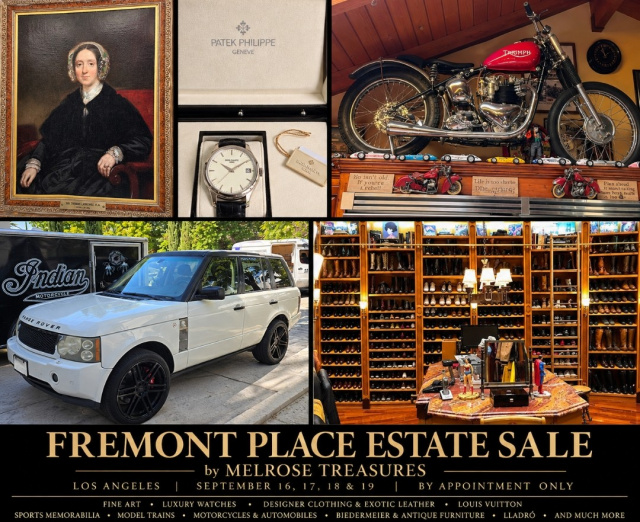
FREMONT PLACE ESTATE SALE
SEPTEMBER 16, 17, 18 & 19
BY APPOINTMENT ONLY
Melrose Treasures Estate Sales Los Angeles will be conducting an exceptional four-day private estate sale inside historic Fremont Place, featuring an extraordinary collection assembled over many years.
This approximately 6,000-square-foot residence is filled with fine art, luxury watches, automobiles, historic and custom motorcycles, designer clothing and exotic leather, major sports memorabilia, model trains, Biedermeier and other period furniture, clocks, porcelain, historical material and an enormous variety of unusual collectibles.
FINE ART
Highlights include two pastel portraits by Mary Cassatt, a large oil portrait of a ...
Read More
September 7, 2026 @ 11:43 AM
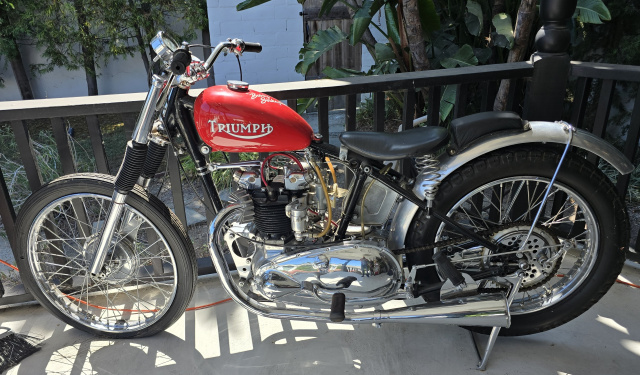
A legendary piece of American motorcycle drag-racing history is coming to our exclusive Los Angeles estate sale.
This 1952 Triumph Thunderbird is Bobby Sirkegian’s celebrated “Pretty Boy II,” the 650cc gasoline-class drag racer he campaigned during his remarkable teenage racing career.
At only 13 years old, Sirkegian rode Pretty Boy II to victory in the 650cc class at the historic 1953 sanctioned drag racing championships at Pomona, California, and repeated the achievement in 1954. During his teenage racing career, Sirkegian accumulated more than 200 victories and numerous track records.
The 650cc Triumph engine was extensively prepared for competition by noted tuner Fred Ford, with oversized ...
Read More
September 7, 2026 @ 11:39 AM
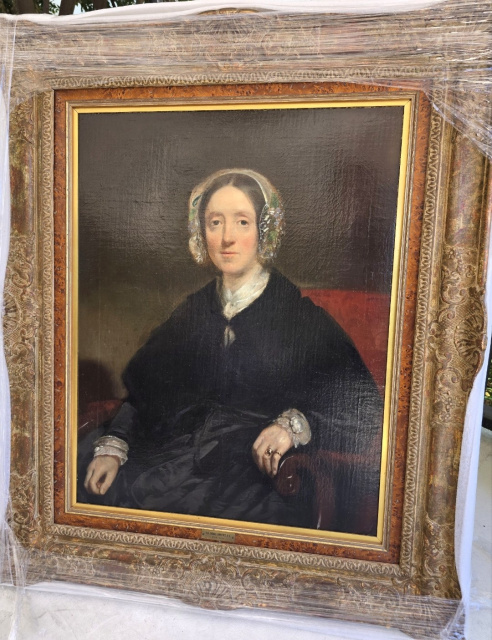
SIR THOMAS LAWRENCE R.A. — LOS ANGELES ESTATE SALE
A remarkable large-scale oil portrait by Sir Thomas Lawrence (British, 1769–1830), from a prominent private Los Angeles estate collection.
“Portrait of a Woman in a Lace Morning Cap”
Oil on canvas
Approx. 51 × 41 inches framed
Recent examination revealed a faint painted “TL” inscription at the lower left, visible under strong directional light. The painting also retains its aged keyed stretcher with historic inventory markings and an old frame plaque reading:
“SIR THOMAS LAWRENCE, R.A. 1769–1830”
One of a number of significant works of art and exceptional objects being offered at our...
Read More
August 14, 2026 @ 8:35 PM
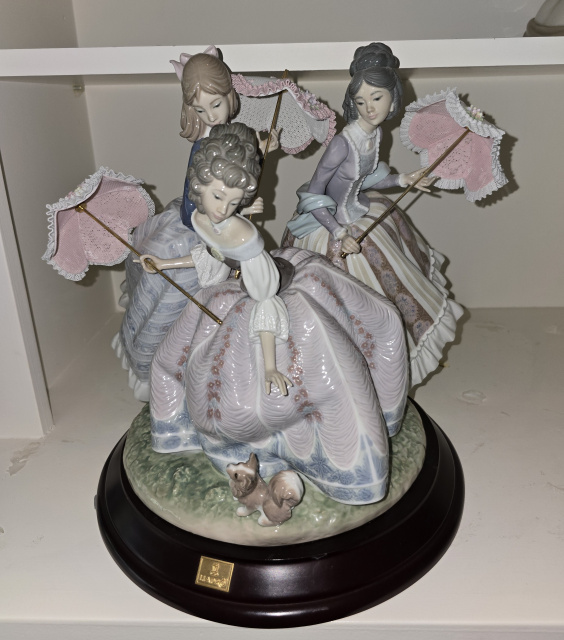
Melrose Treasures Auctions is pleased to present a special collection of 50 Lladró porcelain lots from a Los Angeles estate. The collection features elegant figurines, large-scale compositions, limited editions and retired examples spanning decades of Lladró production. Each piece has been individually researched, photographed and cataloged for auction. Online bidding is now open through LiveAuctioneers, with collectors nationwide able to participate. Presented by Melrose Treasures Auctions, the auction division of Melrose Treasures Estate Sales Los Angeles. https://www.liveauctioneers.com/catalog/427963_the-lladro-collection-of-a-los-angeles-estate/
Read More
July 15, 2026 @ 5:26 PM
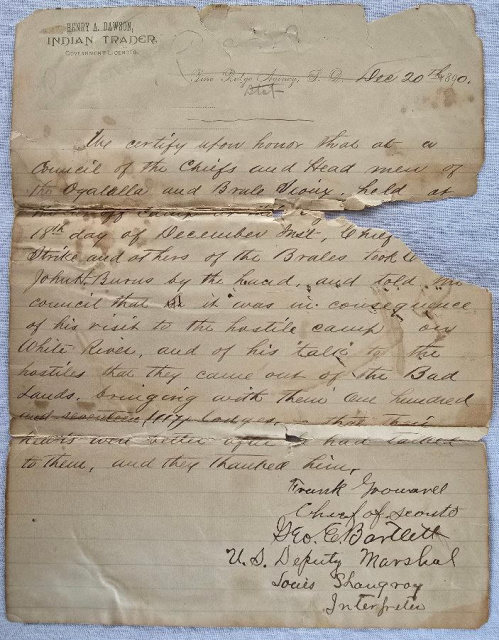
If you scroll through mainstream history books about the 1890 Ghost Dance crisis, you will read all about the military movements, the political failures, and the heartbreaking tragedy that took place at Wounded Knee on December 29, 1890. But history completely overlooked the story of a man who stepped directly into the crossfire to try and stop it from happening.
His name was Judge John H. Burns, but across the territory, he was already famously known by a completely different name: "The Indian Judge."
An Unrecorded Discovery in a Century-Old Archive
As we continue to share the remarkable historical discoveries uncovered from the Judge Burns private estate trunk archive, we have unveiled what is arguably the most significant,...
Read More
July 9, 2026 @ 7:59 AM
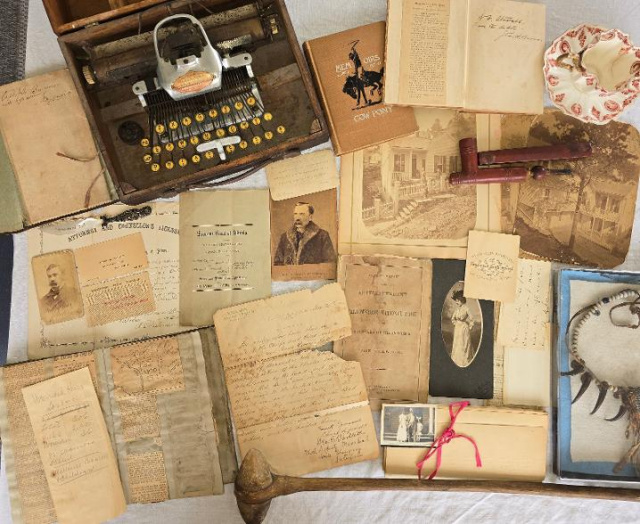
An Extraordinary Discovery...A Forgotten Historical Archive...A True Deadwood Story...Presented by Melrose Treasures Estate Sales | Los Angeles
The journey of discovery begins in Deadwood, South Dakota. The year is 1877. Nearly 150 years later, just when you think you've seen everything after nearly 20 years in the estate sale business... something completely unexpected happens . I received a call from the great-grandson of a prominent Deadwood family who had inherited his family's estate and wanted to sell several items, including jewelry and antique pocket watches. As I looked through the collection, something unexpected caught my eye—an antique Native American peace pipe displayed inside a cabinet.Curious, I ...
Read More
June 3, 2026 @ 10:35 AM
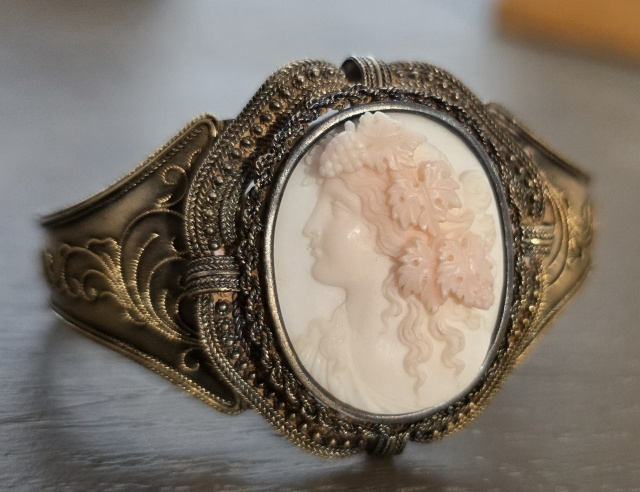
Los Angeles Estate Sales & Appraisals: Rare Victorian Cameo Find ??Melrose Treasures Estate Sale Company Los Angeles, our primary goal is always to help families maximize the value of their estates through beautifully organized, highly successful public estate sales.However, we know that every family's needs are different. When a local beneficiary recently called us looking for an immediate solution for her late mother's massive costume jewelry collection, we stepped in with a direct buyout at Fair Market Value.This stunning, intricately detailed Victorian-style cameo cuff bracelet is one of two similar historic pieces we uncovered from that spectacular estate call!How Melrose Treasures Can Help You:??? Full-Service Estate ...
Read More
May 5, 2026 @ 6:42 PM
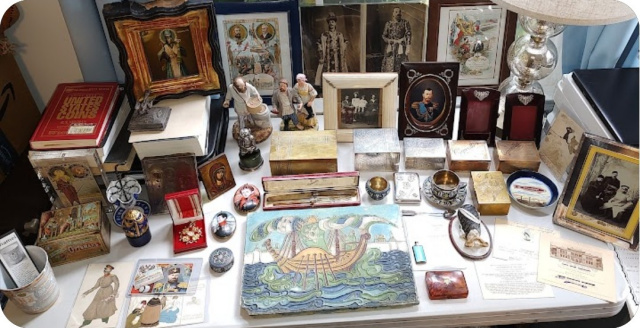
Boston-Born Integrity. Los Angeles Expertise. At Melrose Treasures Estate Sales Los Angeles, we don’t believe in the "Twilight Zone" of shady business and system manipulation. Born and raised in Boston, I bring a straight-shooting, no-nonsense approach to every estate we handle. Whether we are liquidating high-value estate jewelry or 19th-century collectibles, our mission is simple: Transparency, honesty, and a fair shake for every family. From North Hollywood to Beverly Hills, see why Melrose Treasures Estate Sales Los Angeles is the trusted choice for families who want the job done right. The photo is of a spectacular Russian silver, gold and decorative arts collection from a West Hollywood estate which included Faberge ...
Read More
May 3, 2026 @ 9:09 AM
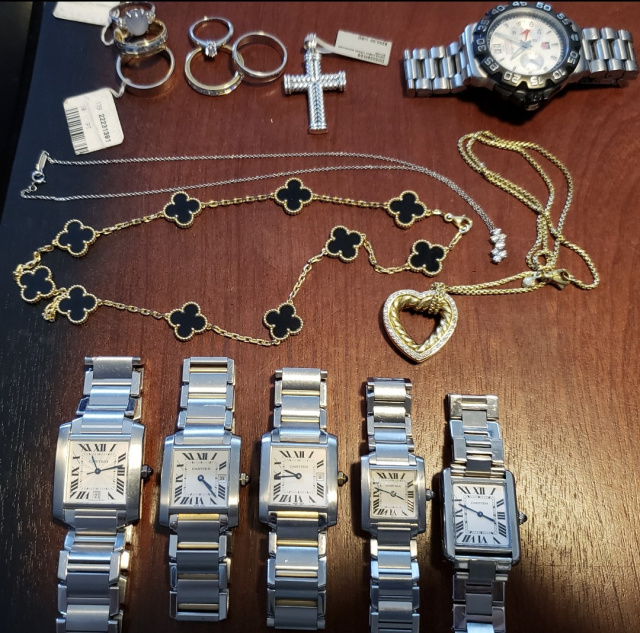
From a Studio City Estate – A Look Back A selection of fine and designer jewelry that came through a past Studio City estate, including Cartier watches, a Van Cleef & Arpels necklace, David Yurman 18K gold, and Tiffany & Cartier pieces. Every estate is different. In some cases, a full estate sale makes sense. In others, a direct buyout is the better approach. At Melrose Treasures Estate Sales, we evaluate each situation carefully and guide our clients based on what will serve them best — both financially and practically — throughout Studio City and the surrounding areas including Sherman Oaks, Tarzana, and North Hollywood.
Read More
March 27, 2026 @ 9:35 AM
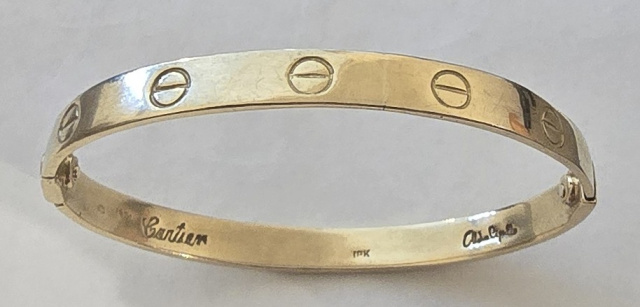
Not every important piece of jewelry reveals its significance at first glance. The Cartier Love bracelet was designed in New York in 1969 by Aldo Cipullo — a design that would go on to become one of Cartier’s most iconic creations. Signed Aldo Cipullo examples are associated with the earliest 1970s production period and are not details typically seen on later Love bracelets. These early pieces often reflect a more hand-finished approach, with subtle variations in engraving, form, and overall character. Rather than the more uniform precision seen in later production, these distinctions are part of what many collectors appreciate about original examples from this period. To the untrained eye, those differences can be easy to ...
Read More

 RSS Feed